[Anime is Culture] Get in the Robot, Shinji: “Evangelion” and Post-Bubble Japan

The future is grim.  You did everything your parents told you to do to succeed.  You studied hard. You passed your exams. You graduated and applied for a job at a company.  Surely, there would be a job waiting for you.  Just like it had been for your father.

Instead, everything your parents told you was a lie.  Companies are no longer hiring younger workers en masse, preferring to hold onto their older employees to not break their promises of lifetime employment to them.  Only the top 10 percent of graduates are even considered now, with those missing that cut falling by the wayside.  What’s even scarier is that the competition to enter the workforce is nothing like what your parents faced.  Hyper-confident and hyper-capable women are now able to enter the running, and the companies are scooping them up in droves.
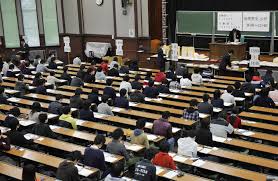
Entrance Exam1
Every year, thousands of students take college entrance exams trying to make it into the top universities.  Many of these students will not make it. (image via japantimes.co.jp)

Welcome to the Post-Bubble Era of Japan.  As you may recall from my last Anime is Culture article, Japan started making huge concentrated efforts to rebuild their broken country after World War II.  With the rise of democracy and assistance from the American government (as shady as it was, it did help their recovery), Japan rose from the ashes like a phoenix.

With Article 9 in place, the Japanese were prevented from funding a full standing military.  Instead, they focused on promoting their peace policies by developing technology that could be used to improve the lives of people around the world.  In doing so, during the 1970’s and ’80’s, Japan became an economic powerhouse.  Companies like Toyota and Sony were worldwide names that put out products sought by millions around the world.  This would be Japan’s economic bubble.

Such success led to the prosperity of the Japanese people.  During this time, the vast majority of Japanese considered themselves middle-class on the socioeconomic scale.  Men would go to school and then apply for company jobs.  After graduation, these companies would pick them up, and their careers would be set.  Everyone was able to earn a living wage and live relatively comfortable lives.

However, this would not last.  Around 1990, the economic bubble burst, causing thousands of companies to lose money and default on loans.  This led to massive unemployment, and a huge economic crisis fell upon the people.  The generation of young men and women that came of age during this time were promised the same opportunities that their parents had enjoyed, but the bursting of the bubble effectively shut them out.  Instead of accessible employment, there was now a small window where only the elite could enter through.

freeter1
If you can’t make it into a steady job, you end up working multiple part time jobs to make ends meet.
Salaryman
These office workers are the ones who made it.  They had to fight and struggle VERY hard to get to where they are now. (image via shutterstock.com)

This grim and foreboding atmosphere was what influenced the tone and stories of anime during the ’90s.  One of the greatest examples of a post-bubble series is the highly influential anime Neon Genesis Evangelion.  In the series, the world has been destroyed by a cataclysmic event known as the Third Impact.  As a result, more than 50 percent of the human population was wiped out, and those who are left struggle to survive in a world where the sea is dyed red like blood.
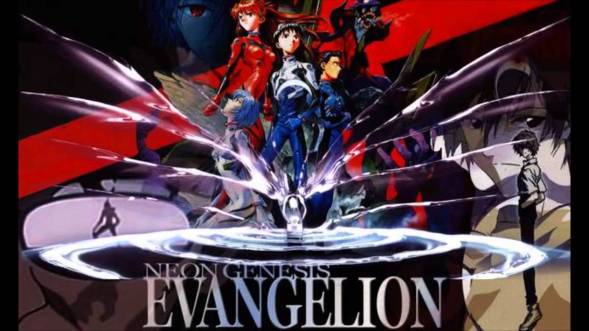
Evangelion
One of anime’s cult classics and the series that defined a generation.

The main character, Shinji Ikari, is a young adolescent man that is forced by his father to fight in a giant robot against alien lifeforms known as “Angels.”  However, this isn’t the only struggle he faces.  He also struggles to come to terms with the new social norms he’s entering into.

Eva-Shinji1
Shinji is the representation of the Japanese post-bubble male.  He doesn’t want to pilot and fight in the EVA, but he is forced to do it.

He is forced to do the dirty work of NERV headquarters when fighting the Angels.  When he’s not fighting, he’s under rigorous testing and examination.  Not only is he constantly bombarded by work like this, he is also surrounded by capable women that outshine him.  Rei Ayanami, the First Child, is a model soldier, following her orders without dissent or complaint, almost like a machine.  Asuka Langley Soryu, the Second Child, is a German-born pilot that demonstrates superiority in everything she does.

moe 123755 ayanami_rei bodysuit neon_genesis_evangelion sadamoto_yoshiyuki souryuu_asuka_langley
Rei (White) and Asuka (Red) represent the hyper competent women that are entering the workforce and realms that were traditionally reserved for men.
Eva-Shinji2
Shinji is constantly overwhelmed by the pressure of the expectation put on him and often retreats into himself.

This is representative of the the world seen by the Post-Bubble Generation.  Shinji is the post-bubble male who has to struggle to survive in the unforgiving world of NERV, which is representative of the Japanese company.  He managed to get in, but only because his father is the head of NERV.  However, his performance as a pilot is an utter disappointment  compared to the other more capable women, and it shows in his father’s favor for Rei.  This relationship he has with the other pilots shows how the post-bubble male viewed his job prospects.  If he was lucky enough to get a job, he still would never be able to compete with the influx of women into the workforce.

This mindset lead to many men losing confidence in themselves.  Just like Shinji, they viewed themselves as weak and unable to do anything by themselves.  They want to rely on the help of their parents, who know that they are struggling but can’t really help.  This leads into Shinji’s struggle with the adults in his life.  Much like his strained relationship with his father, Gendo, the post-bubble male wanted desperately to gain the recognition and acceptance of the older generation, but they were left to fend for themselves instead.  The companies would only accept them into the fold if they found a use for them, just like how Gendo did with Shinji.   The women who entered the workforce ahead of the post-bubble men could now exert their power over these young males, and the shift in gender-power dynamics was incredibly daunting to them.

On one hand, you have Ritsuko, NERV’s chief scientist and the one in charge of monitoring the usefulness of the EVA pilots.  She is cold, calculating, and regards Shinji not as a person, but more of a lab rat or tool to further her own research and goals.  On the other hand, there’s Misato, Shinji’s direct superior and caretaker.  She pushes herself onto him, making him roommate with her.  While she does it in good nature, Misato lords her femininity over Shinji as she tries to mold him into what she believes is a better man.

1411327022409
Misato is a woman who isn’t afraid to flaunt her femininity.
ritsuko-akagi-2674
Ritsuko is job oriented and sees others as tools to further her own research and goals.

So what do you do when your world view and job prospects mirror the apocalyptic world of Evangelion?  How do you survive in the world when you can’t get a job because of the rise of women and the highly selective hiring process?  We’ll discuss this in my next “Anime is Culture” post, “Hide to Survive: Otaku, NEET, and Hikikomori.”

NHK
Welcom to the NHK was a series that really captured the thoughts and mindsets of NEET and Hikikomori.

Pacific Pac-Man


Just a short walk from the famous Ala Moana Shopping Center, customers can find a quaint little restaurant and wine bar named Bread and Butter.  However, there is something unusual about this small dining spot.  Outside of the shop, a large statue of Pac-Man stands, welcoming customers in.  Neon lights fashioned into the shape of the classic Pac-Man ghosts shine through the windows of the restaurant, catching the eyes of many a passerby.  Welcome to the Pac-Store Hawaii!

_MG_6771

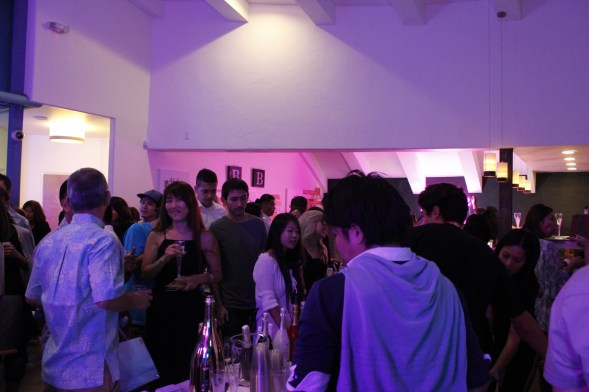
A few weeks back, I had the fortune to attend the press event and grand opening for the cafe.  I was there to take pictures and assist Boss Yadao with reporting on the cafe here while he writes up an article for the local paper.  (Boss Yadao’s note: You can find that article right here.) The event was great, and I thoroughly enjoyed myself.  We got in early as press, and managed to get some good pictures of everything the place had to offer.  However, the venue quickly filled up once it was opened up to the public, with over a hundred people coming to enjoy the cafe and share their love for Pac-Man.

_MG_6924

Pac-Store Hawaii is a Japanese pop-up cafe, made through the collaboration of Bandai Namco, and Diamond Dining International Corporation.  It is the first of its kind in America.  These types of collaboration cafes are something that are unique to the Japanese anime, manga, and video game industries.  Perhaps some of you readers have heard of the character or series-themed cafes one can find in Japan with collaborations with series like Fate/Grand Order, Re:Zero, or studios like Studio Ghibli.

_MG_6783
Jason’s note: GAH IT’S A PICTURE OF ME *runs off and hides*

_MG_6816

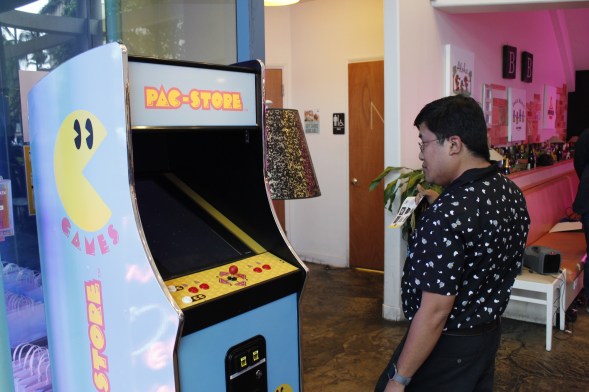
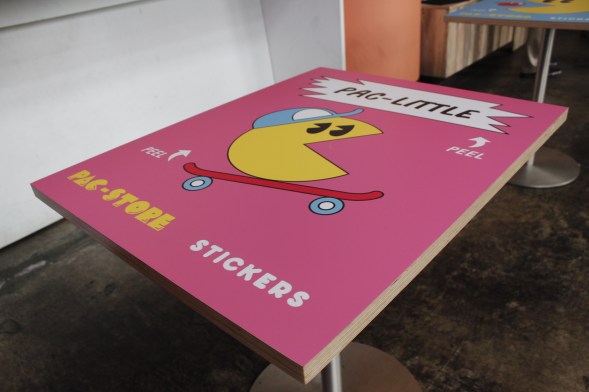
At these cafes, customers can enjoy an environment filled with themed decorations and furniture featuring their favorite characters in the current collaboration.  In the Pac-Store, the tables are decorated with adorable pictures of different Pac-Man characters and mascots.  Hanging on the walls, Hawaii-themed artwork can be found, featuring the characters enjoying local activities like hula dancing or surfing.   Fittingly, the store has its own Pac-Man game cabinet, where customers can play and vie for a spot on the high-score board.

_MG_6784
The cabinet isn’t limited to just Pac-Man either!  I absolutely enjoy playing Galaga.

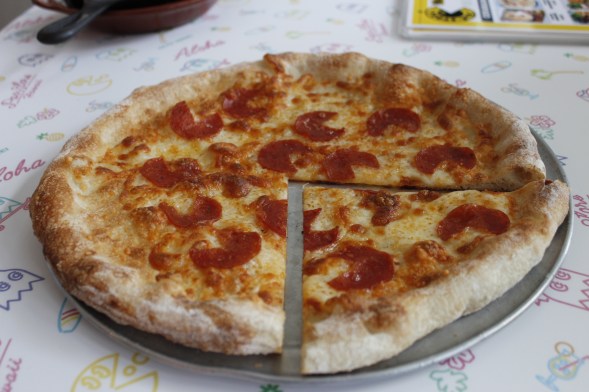
However, the main event at any cafe is definitely the food, and the food one can find there is definitely a sight to see.  This cafe serves up some incredibly cute food, all in the form of Pac-Man and his buddies.  From Pac-Man shaped pancakes to the Ghost-shaped Red Velvet cake, there are so many different choices, and they’re all so pleasing to the eye that you just want to buy them all, just to take pictures of them.  Lucky for me, they set out the entire menu at the press event, so I got to take pictures of all of these delicious looking novelties.

_MG_6752_MG_6753_MG_6757_MG_6759_MG_6760_MG_6764_MG_6772

Speaking of novelties, there are also special edition merchandise that can only be found at this specific cafe.  This is one of the other draws of these types of cafes, as some of the merchandise they sell is limited to that one specific spot, and it’s only available for a very limited time.  The Pac-Store sells a range of different items, from T-shirts, to tote bags, hats, and even jewelry.

_MG_6747
Note: You can’t actually peel these giant “stickers” off the tables. Believe us, we’ve tried.

_MG_6780_MG_6781

Aside from all of the things to see and eat at the press event, the boss and I also got a chance to hold an interview with the masterminds behind this cafe.  Hide Sakurai, the President and CEO of Diamond Dining International Corporation, met with Kai Tanaka of Bandai Namco about a year ago with the idea of opening up a pop-up cafe using his Hawaii location, Bread and Butter.  We asked him why did he choose Hawaii when his company has other locations in other parts of the world that have larger populations and influxes of tourists. In other words, please support this pop-up endeavor as it may lead to other pop ups of Bandai Namco series/franchises in the future (*cough* Tales series and Gundam please*cough*)

_MG_6848
Jason’s note: GAH IT’S ME AGAIN *runs and hides again*
_MG_6852
Kai Tanaka, executive officer of Bandai Namco’s Life Entertainment Branch, left, and Hide Sakurai, president and CEO of Diamond Dining International Corporation.

Anyways, I’m very sorry this article took so long to put out.  I’ve been swamped with homework and projects as the end of the semester draws near.  I’ll be pushing to get at least two more articles of “Anime is Culture” before the semester ends and my stint as an intern comes to a close.  Those articles will be examining the popular anime of recent years like Attack on Titan and Re:Zero.  Look forward to it!


[Kawaii Kon 2018] Recovery of an otaku intern

Hey everyone!  Sorry I haven’t posted recently.  Besides last weekend being the dates for the local area’s only anime and manga convention, I dislocated my shoulder and have had my arm in a sling until yesterday!  However, I’m fine now, and the doctor said I can resume light tasks with my arm again.  Never underestimate LARP (Live Action ROle Play) events at these conventions!

_MG_6629
Artist Alley was bustling as usual.

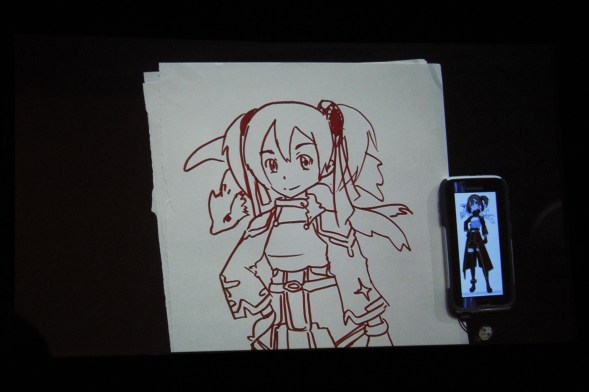
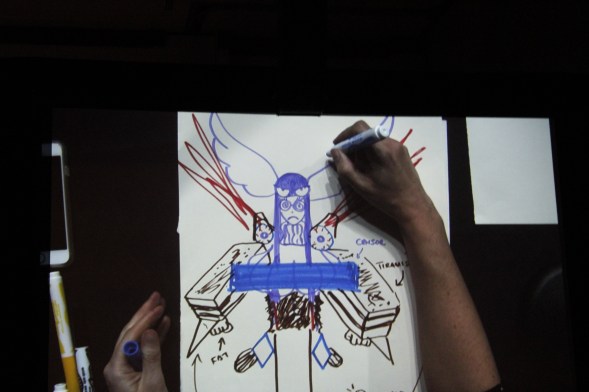
Anyways, I thoroughly enjoyed my time at the convention.  Despite the mishap, I got to do everything I wanted to do in my previous post.  The How to Draw with Voice Actors panel was incredibly entertaining.  The panel featured the talent of English voice actors Christine Cabanos (Silica from Sword Art Online), Carrie Keranen (Satsuki Kiryuin from Kill la Kill), Brittney Karbowski (Black Star from Soul Eater), and local-born actor Micah Solusod (Soul from Soul Eater).

The idea was for one voice actor to draw one of their characters, using a reference, with their drawing projected live to the audience, but not to the other panelists.  At the same time, the featured actor described the character to the other panelists, who had to draw what they thought the character looked like.  The results were both incredibly creative, and insanely hilarious.

_MG_6650
The voice actors take their positions as Micah Solusod is the first to live draw.
_MG_6652
Micah Solusod grades Brittney Karbowski’s interpretation of his description of Yuno from Black Clover.
Yuno_profile
For the record, here’s what Yuno is supposed to look like. (via blackclover.wikia.com)
_MG_6658
Micah Solusod’s rendition of Karbowski’s character, Black Star.
Black_Star
… aaaaaaaand here’s actual Black Star. (via souleater.wikia.com)
_MG_6660
Christine Cabanos did an amazing job drawing her character, Silica.
_MG_6667
Micah Solusod’s drawing of Satsuki Kiryuin from Kill la Kill according to Carrie Keranen’s descriptions.
satsuki
… aaaaaaaand you get the idea. (via https://www.pinterest.com/pin/351843789614099869)

You can see most of the panel right here in this video posted by YouTube user Pipperry Took.

And here are the last few minutes.

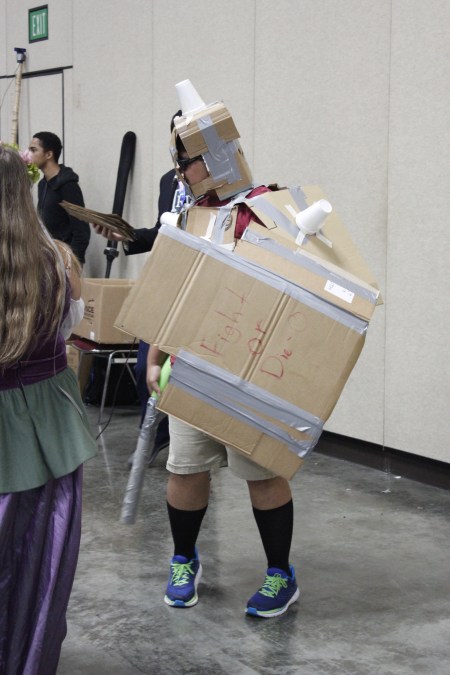
I also got to participate in the Cardboard Megabrawl.  My friends made some ridiculous looking armor for me in our 1-hour time limit.  However, that was short lived as this was the event where I dislocated my shoulder.  Haha, it was fun while it lasted, but I’ll have to rethink my strategy for next time if I don’t want to risk popping the same shoulder out again.

_MG_6675
Little did I know that my armor would not protect me from what was to come…

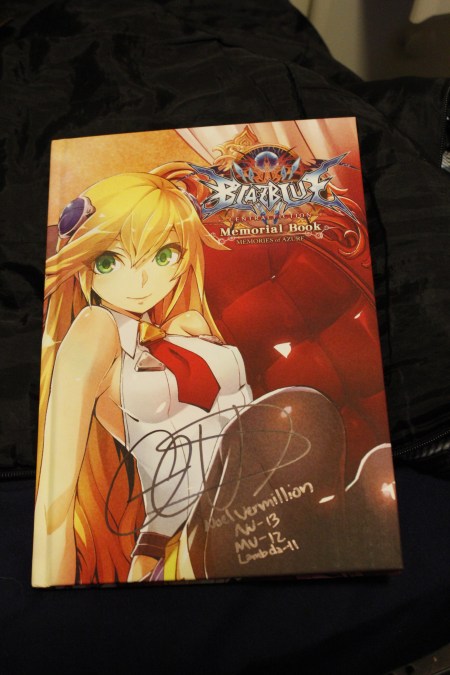
Despite the mishap, I continued to attend the convention after the docs at the hospital treated me.  I was in a sling for the rest of the weekend, so I couldn’t really take any pictures.  I did manage to catch Cristina Vee’s 2nd autograph session.  I missed the first one because of the shoulder the previous day.  It was so exciting to meet one of the voice actresses whose work I’ve been following for years!

_MG_6683
So glad to have had this signed by Cristina Vee!

Events like Kawaii Kon are few and far between here in Hawaii, but that makes these types of conventions all the more worth it to attend.  I am always amazed at how quickly the convention center is transformed from an empty building into three floors of otaku-dom.

These conventions are such a huge contribution to the community.  They create a safe space, in a sense, for people to freely express themselves.  It doesn’t matter who you are, or where you’re from; your religion, sexuality, etc.  Everyone is there to do one thing, and that is to celebrate and enjoy our love for anime, manga, video games, comics, cosplay, and all other facets of the otaku and nerdist kingdoms.  If only the world could reflect that sort of unity.

Anyways, that’s it for my post-convention report.  It’s not much because of the injury, but I’ll try to make up for it with other interesting articles, like my next one!  My next Anime is Culture post will be addressing the topics of hikikomori and the pressures of Japanese society portrayed in anime/manga.  This might hit some people a little close to home, but please look forward to it!

Video game-themed events press “start” in isles

As I’m writing this in the early, holy-cats-I-remember-staying-up-this-late-when-I-was-working-for-the-Star-Advertiser hours of Friday morning, we’re a few hours away from the kickoff to Kawaii Kon 2018.

But while I’m thinking about that — and the fact that this is the earliest in the year that I’ve ever had to think about Kawaii Kon in my 14 years of covering the con, and I feel so unprepared — there are a few other pieces of news about upcoming events that have crossed my radar. Half of them are happening this weekend, and all of them deal with video games.

I’d be remiss if I didn’t mention that Hitbox Music Ensemble and director Chris Suzuki — the focus of what ended up being my last Kawaii Kon preview at the Star-Advertiser, *sniffle* — will be playing in the Main Events hall, Ballroom B, at 8:45 p.m. Friday. This year’s concert, “And All That Jazz…,” will feature video game music arranged in various styles including swing, big band, funk, soul, and, of course, jazz.  Here, for instance, is some rehearsal footage of “Floral Fury” from Cuphead.

If you like what you hear — or if you just like supporting local music in general — you should also consider throwing a few dollars in the direction of the group’s Patreon page. There’s currently … wait, only one supporter so far? And it’s not me? Well, I should get on that sometime soon. And you should, too.

FF KKon

One of the showcase events Kawaii Kon is promoting this year is also video game related. “A New World: Intimate music from Final Fantasy” brings conductor Eric Roth, composer Hitoishi Sakimoto (who composed the soundtracks for Final Fantasy Tactics and Final Fantasy XII, but is also responsible for the game soundtracks for classics as diverse as Radiant Silvergun, the Ogre Battle/Tactics Ogre franchise, Gradius V and the Valkyria Chronicles games), and the New World Players chamber ensemble to Honolulu for the first time There’s a VIP meet-and-greet experience for $75 starting at 3:30 p.m. Sunday that includes an autograph and photo op with Sakimoto and first dibs on concert seating; if you just want to attend the concert, it’ll only cost $12, with seating at 4:30 p.m. Sunday in Main Events, Ballroom B. (These costs are in addition to the cost for con admission.)

KH Orchestra

But let’s say you’re into another classic Square Enix franchise, Kingdom Hearts, the Disney/Square crossover adventure with the convoluted timeline that no one can properly explain without a big mess of flowcharts. Kingdom Hearts III is coming out … umm … eventually, but (possibly) before that happens, Honolulu is going to be a stop on the Kingdom Hearts Orchestra World Tour. It seems like if you’re familiar with orchestral performances like the two Zelda: Symphony of the Goddesses shows that played in Honolulu, you’ll know what to expect from this show: familiar songs from various games’ soundtracks played by an orchestra while game footage is shown on a giant screen. You know, like this.

KH Orchestra 2

If you’re interested in going, you have some time to plan; the concert’s scheduled for Sunday, Aug. 12, with tickets going on sale Monday, March 26.

Finally, if music isn’t your thing and you’ve somehow made it this far into this post, something really interesting seems to be cooking over at Bread & Butter, the restaurant next door to Shokudo at 1585 Kapiolani Blvd.: Pac-Man. A few days ago, friend of the blog Tara Tamayori posted a picture of this menu from what appears to be a pop-up themed cafe:

28336356_2150937784923237_3730366877408362685_o

It looks like there are some of the usual crossovers — pancakes, pizza (thankfully without a wedge missing), and generally round Pac-Man-ish foods come to mind — as well as some interesting concepts (a ghost loco moco? Hmm…). The most intriguing take-away from this menu, though? The fact that there’s a Pac-Store opening somewhere at some point during this campaign, which runs through May 31, with “fashion, goods, food and events.” More details as they develop, but this looks like it’s going to be fun.


[Kawaii Kon 2018] Lancen’s pre-show picks

Hey all!  Sorry for the lack of a post last week.  I had an extremely busy weekend and no time to write, or even watch anime.  Anyways, for those who don’t know, this upcoming weekend is Hawaii’s very own anime convention, Kawaii Kon!

Every year, thousands of attendees, both local and out-of-state, visit the Hawai’i Convention Center to share in their love and enjoyment of the Japanese anime and manga culture.   Usually I would be setting up a table to sell my artwork, but this year I’ll be just a regular attendee.  Well, not so regular, as I will be making an effort to write a report for each day.

The boss asked me to write about 3 events or activities I’m excited to attend, so I’ll do just that.

How to Draw with Voice Actors
3-4 p.m. Friday, Ballroom B

kons past
Haha, this is what I looked like at the past Kawaii Kons — dead tired behind my art table. But I enjoyed seeing people enjoy my stuff.

As something of an artist myself, this event really caught my eye.  I’ve always been stuck behind a table for many of my previous conventions, so I could never attend events like these.  I really wanna see if my favorite English voice actors can draw the characters they voice, and hopefully there will be an opportunity to request a character for them to draw!

Meeting Cristina Vee

Panels:
Cristina Vee Q&A
11 a.m.-noon Friday, room 315

How to Draw With Voice Actors
3-4 p.m. Friday, Ballroom B

Women of Animation
1:15-2:15 p.m. Saturday, Ballroom B

Ask an Anime Character
Noon-1 p.m. Sunday, Ballroom B

Autographs:
2:45-5:15 p.m. Saturday and 1:30-3 p.m. Sunday

Noel
Cristina Vee plays the voice of Noel Vermillion (center), one of my favorite characters from BlazblueCourtesy Arc System Works.

Cristina Vee is by far one of my favorite English voice actresses to date, playing roles like Noel Vermillion (Blazblue series), Sakura Matou (Fate series), and Homura Akemi (Puella Magi Madoka Magica).  I have been requesting her appearance for years now, and it’s so nice to see my request coming true.  I can’t wait to get my Blazblue merchandise signed, and hopefully I’ll be able to draw her a little something as a gift for all her hard work!

The Cardboard Mega Brawl
3-4 p.m. Saturday 
(setup 2-3 p.m.), Exhibition Hall 2 & 3

megabrawl
This was back in 2014, the year our team took 1st place in the Cardboard Mega Brawl.  This wasn’t at Kawaii Kon, but it’s a reminder of how long I’ve been building for my friends.  It’s my turn now!

Every year, I’ve built cardboard armor for my friends to compete in.  This year, it’s my turn to pit myself against the other fighters in the ring.  Using only cardboard, duct tape, and pool noodles, teams have an hour to hastily construct armor and weapons, then pit themselves against one another, trying to knock off the cup targets placed on each others’ armor, or completely destroy those cup targets.  It’s crazy yet controlled in these wack battles.  I also have a couple of friends competing, and I hope I get to battle against them.

Anyway, those are my top things I’m looking forward to so far.  I haven’t totally checked out the schedule, and sometimes things are added last minute.  I’ll be making an effort to write about my convention experiences every day of the convention, and hopefully I get a lot of good pictures.  Until then, I’ll be cramming homework so that my weekend is totally stress free.  I was also thinking of doing something special on this blog, but we’ll have to wait and see. 😉


“Sailor Moon” musical heads to Oahu theaters

A few weeks ago, Anime News Network broke the news that Pretty Guardian Sailor Moon: The Musical-Le Mouvement Final, the last in a trilogy of live-action musicals based on the Sailor Moon saga, would be screening in theaters across the country starting March 10. I looked at the website ANN linked, saw Hawaii wasn’t on the initial list of 18 cities, shrugged and went on with my life.

This morning, the Otaku Ohana Anonymous Director of Forced Social Interaction sent along a link to that same website. I clicked through again, and … yay! We’re on distributor CineLife Entertainment’s radar now!  Specifically, the musical’s listed as screening at Consolidated’s Pearlridge theaters, and Regal’s Dole and Kapolei Commons theaters.

Here’s the plot, according to CineLife:

In “Pretty Guardian Sailor Moon: The Musical-Le Mouvement Final,” Usagi Tsukino says farewell to Mamoru Chiba as he is set to leave for school in America. As Usagi says goodbye, she faints, and a super idol group called the Three Lights appear to catch her fall. Meanwhile, new enemies – the “Shadow Galactica,” are calling themselves Sailor Guardians and are aiming to steal Sailor Crystals! A mysterious young girl named Chibi-Chibi and a new group of Sailor Guardians, called the Sailor Starlights, also appear, but are they friend or foe? Can Sailor Moon and the Sailor Guardians stop the Shadow Galactica before it’s too late?

I cross-referenced the theater listing with what Fandango has in its ticket database, and while tickets and dates are available for the Pearlridge screenings (11 a.m. Saturday, March 24, and 7 p.m. Monday, March 26), there isn’t any word yet on the Regal screenings. I’ll update this post (and our various social media channels) whenever that information arrives.

A really, really fast plug for the Anime Swap Meet and Hawaii Collectors Expo

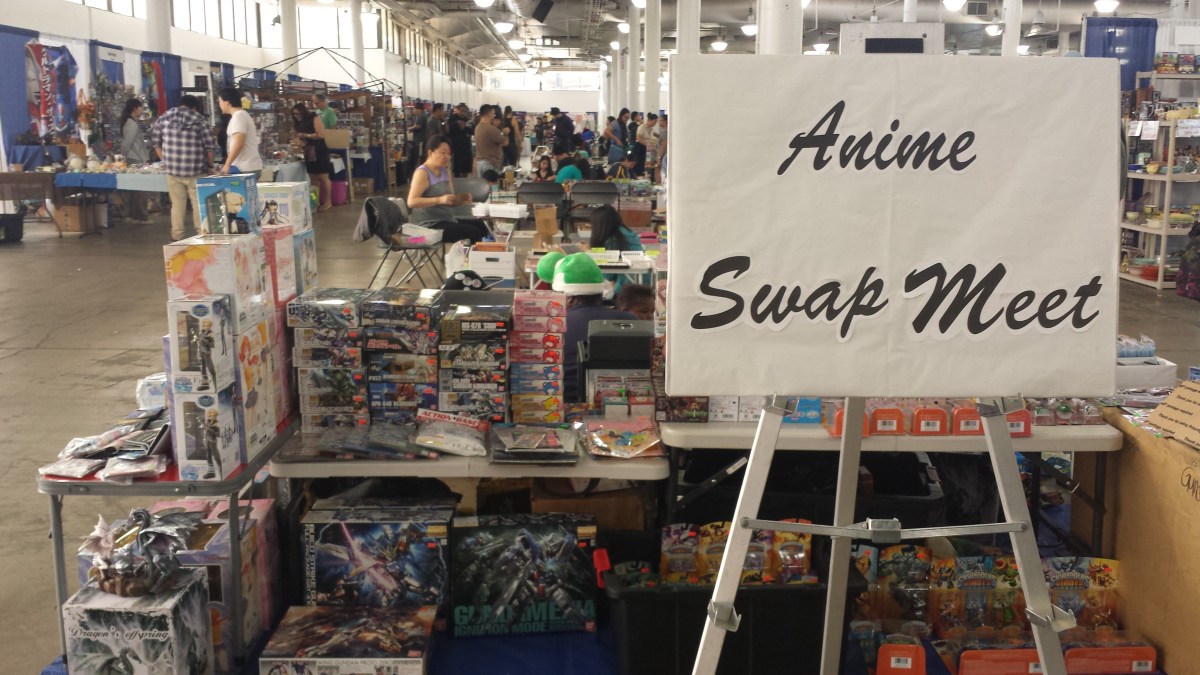
The Anime Swap Meet, hosted by Kawaii Kon, is back for a fourth year at the Hawaii Collectors Expo at the Blaisdell Exhibition Hall. And after a year’s hiatus, tag-team partner in fandom Wilma Win and I are back to sell more of our stuff!

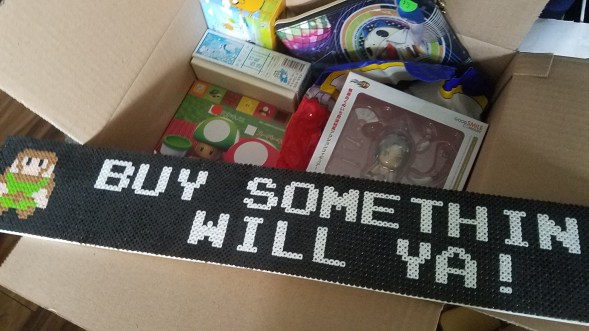
Here’s a sneak peek at one of the six(!) boxes we’re bringing.

ASM 2018 box
The sign still isn’t for sale. But I’m still bringing it for display purposes. Because it really is a cool sign.

So as you can imagine, we’ve been doing a lot of running around, gathering extra stuff to pack, taking care of a lot of other assorted life things in between and not having a lot of extra time to write a post about it for this here blog. Considering showtime for us is in a little over 12 hours from my writing this, we’re cutting publication of this post pretty close.

So here are the high points, in handy bullet-list form:

  • Collectors Expo 2018We have stuff! Come buy it!
  • A number of like-minded fans will be there to sell their stuff, too, from 9 a.m. to 6 p.m. Saturday and 10 a.m. to 4 p.m. Sunday.
  • We have stuff! We’d like to think it’s all quite affordable!
  • Speaking of affordable, Kawaii Kon will be selling three-day passes to next weekend’s convention. (Holy cats, it’s next weekend already!) It’s your last chance to buy ’em at a discounted rate.
  • Did I mention that we have stuff to sell?
  • The Anime Swap Meet is just one corner of the 28th annual Hawaii Collectors Expo, which, in addition to housing vendors of any collectible you could possibly imagine, is also spotlighting the Costumers Guild of Hawaii and artists Jon Murakami, Roy Chang and Mog Park. You should buy stuff from them.
  • Although we’ll be happy and grateful if you buy stuff from us, too.
  • Admission is $5 general per day, $2 for senior citizens, and free for anyone with a military ID or a badge from last year’s Kawaii Kon or Comic Con Honolulu. You can also get $1 off by printing out or showing the image available at this link.

Hope to see you there! (And please buy our stuff. Lugging six heavy boxes into the Blaisdell Exhibition Hall and setting everything up in about an hour is going to take a lot of work. I should get some coffee chilled and ready.)

Anime is Culture: Pulling the Trigger on Peace


Hey there everyone, sorry for the recent lack of articles.  My class fell behind on the syllabus, and we just got done reorganizing ourselves and getting back on track.  Anyways, Lancen here with another article on anime and its reflection of Japanese culture.  This time, I’ll be talking about anime/manga and its relationship to violence.

In my latest class on anime, we were assigned to watch the film Momotaro’s Divine Sea Warriors.  For those who don’t know, this movie is one of several in a series that were produced during World War II.  The movie features cute animals, reminiscent of Disney characters, going off to battle to fight against the devils in the West.  Just like in the original Japanese fairy tale.  Except the ones heading off to battle are dressed in Japanese military uniforms, parachuting out of planes, using WWII-era guns, rushing tanks to stab the drivers with their bayonets, and ultimately forcing the devils to surrender.

Just from this description, one can see that this movie was a propaganda piece made to motivate the Japanese to join the army and fight for Japan’s victory in the war.  However, there’s more to this than just having a story of victory for Momotaro, Japan’s hero.

Momotaro_still_page3_4
This cute rabbit is ready to unleash hell in Momotaro’s Divine Sea Warriors.  Notice the amount of detail put into his surroundings despite the obvious cutesy character.

The film’s animation demonstrates incredible attention to detail.  Whether it’s the facial expressions of the characters, or the weapons they use, the detail put into them is very realistic, especially with the animation technology they had at that time.

Why go through such incredible effort for the sake of a “children’s” movie? This is where the term “hyper-realism” comes in.  Hyper-realism is when the simulation — anime in this case — feels more real than actual reality.  The attention to detail draws the viewer in and makes them “feel” the reality.  In the case of Momotaro, making the “victory” as real as possible was one way to instill nationalism in its viewers and stoke the fires of the wartime spirit.

Even after the Japanese defeat in WWII, this use of violence in animation to stoke the audience’s spirit did not wane after the war. It just turned in a different direction.  Instead of war, violence is used to promote peace.

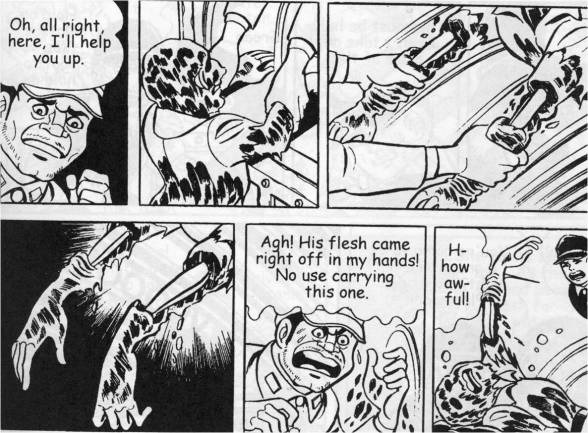
How is violence supposed to bring about peace?  Once again, hyper-realism plays a key role.  An example of this was our assigned reading of volume 1 of Barefoot Gen.  Barefoot Gen is an autobiographical manga created by the late Keiji Nakazawa, one of manga’s most influential creators and a survivor of the A-bomb strike on Hiroshima.  In this manga, there are gruesome depictions of wartime Japan: starving children, the atrocities the Japanese military inflicted on the Chinese and Koreans, and of course the terrifying effects of the atomic bomb, both from the initial blast and the effects on the survivors.

barefoot-gen-image-2
Nakagawa didn’t pull his punches when he wanted to show the effects of the A-Bomb in Barefoot Gen.  Keep in mind that this manga is required reading in many Japanese elementary schools.

If you look at the images from the manga and your stomach turns, then Nakagawa’s manga is affecting you in the way it was intended to.  His use of graphic violence and gore makes it all feel very real, despite being a manga aimed at young children.

The realism of the terrible effects of war makes people want to avoid it as much as possible.  The reader is drawn into the hell that Nakagawa saw that day, and it sends a powerful message.

In America, it is the norm to avoid showing children violent programs or materials until we deem them old enough to handle/understand it.  However, Japan’s incredibly strong stance on peace and pacifism encourages exposing the horrors of violence and war to children at a young age.  According to my professor, Barefoot Gen is required reading in many Japanese primary schools.  Instead of “the children aren’t ready for this,” it’s “This is what happens when you wage war.  This is why we have to promote peace.”

A quick aside from Jason: First off, hi, remember me? I’m still around! Just been busy with some unexpected things, that’s all. Anyway, I just wanted to let you all know that if you want to read more about Barefoot Gen, you can take a look at this reflection that I posted back in 2015, or the related Manga Movable Feast archive, or even the Google Books archive of the profile I wrote in The Rough Guide to Manga. OK, back to you, Lancen.

Have you ever noticed that in many anime, especially more popular ones, killing another person is usually a last resort?  This reflects the changed mentality of the Japanese.

A good example is Vash the Stampede from the famous anime, Trigun.  Despite being one of the best gunslingers in the world, he never shoots to kill, even if that would get him out of a sticky situation much more quickly and effectively.  When he is forced to kill, it shakes him down to his very core, and there is an entire episode dedicated to him trying to cope with it.

After the Allied victory in World War II, the American occupation pushed for the Japanese government to restructure itself, changing from an imperial system to a democratic one.

Included in this change was the ratification of Article 9 in the new Japanese Constitution.  This article declared that Japan would give up the right to wage war and have a standing military.  This would result in the Japanese pro-peace mentality that we see today.  They dislike having military bases in their country, as they see it as them being accessories to war in Asia.

This feeling was especially strong during the Korean and Vietnam wars, where protests broke out against the establishment of U.S. bases.  The U.S. keeps its bases there to deter its rival in the East with a show of strength.  However, Japan’s policy of peace speaks the opposite.  If you have no need for weapons, then neither does your enemy.  Instead of countries fighting one another, let’s work together towards peace.

strike-witches-review-screenshot-02
Why should countries fight each other when they can work together?  Strike Witches is a good representation of this mentality as the Joint Fighter Wing, comprised of girls from various nations from around the world, work together to fight the Neuroi; a dark, alien lifeform that disturbs the peace the world has enjoyed.

What do you think, especially in light of recent events?  Would the Japanese approach to peace work in the West?  Is it too idealistic?

Anime is Culture: What’s the deal with fan service?

[WARNING: SOME IMAGES MAY CONTAIN MILD NUDITY AND SEXUAL THEMES.  VIEWER DISCRETION IS ADVISED]

Hello everyone, I’m back.  It’s been a little over a week since I returned from Japan, and I’ve had to hit the ground running since I missed the first week of the Spring Semester during the trip (IT WAS TOTALLY WORTH IT THOUGH).  As I’ve been grinding my way through catching up with homework, I thought of something interesting: Why not take what I learn in my anime class (yes, there’s an actual anime class that exists), and share a little bit of it with you readers? The first topic I thought would be interesting was the topic of “fan service.”

Dengeki_G's_Magazine_Oct_2015_Kanan
A poster of Matsuura Kanan from Love Live! Sunshine!! in Dengeki G’s magazine.

What is fan service?  To readers who may not be familiar with the term, “fan service” is the practice of adding elements that attract viewers and keep them watching/reading.  What many people in the West think of as just blatant perversion is actually a production and marketing strategy used in the hyper-competitive and capitalistic manga/anime market.

I’m sure most of you have heard the line “Sex sells” before, and Japan’s popular manga and anime market has taken it to heart.  To understand this, one has to understand the way manga works and how it differs from the Western concept of comics.  The reason I am using manga in this comparison is that many anime are derived from manga, and therefore a lot of the same techniques used in the marketing of the original manga get used by the anime side of the industry.

Unlike Western comics, which are published primarily monthly, all popular manga are published weekly.  It doesn’t matter if you’re a beginner trying to break into the game, or if you’re a seasoned veteran.  If you are a beginner, to get your start, you would have to send your manga to companies to be published in a collection among numerous other new artists’ works.  These collections are sold in cheap books that are meant to be thrown away after reading.

These collections of new manga artist works all have surveys at the end asking readers to give their opinions on which artists’ manga they enjoyed.  If the company sees that people like your manga, they will offer to put your manga in one of their more mainstream publications.  You have one week to send in your next chapter.  If that week’s publication gains traction, then you get another week from the company.  The process will continue until you quit, or the audience loses interest.  If your audience starts waning, the company will ask you to end your manga, and you’ll be kicked out of the lineup.

bakuman-a-manga-about-manga-creators
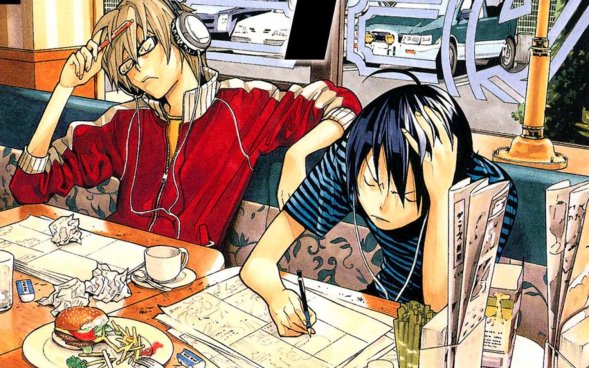
Manga artists never get a break.  Especially when they’re trying to break into the mainstream. (image from Bakuman by Tsugumi Ohba and Takeshi Obata)

How do you stay in the game?  With a good story?  That’s impossible with only 25 pages a week, with people looking at your pages for only 4 seconds each, and with your manga just one of thousands of other hopefuls.

That’s where fan service comes in.  It’s not a far-fetched notion to say that the first thing a person will notice is an attractive image of a character, whether it be a man or woman.  If you can catch the eyes of readers with a girl in a swimsuit, or a guy with his shirt off and muscles glistening, you can increase your chances of being noticed by a small margin.

free-featured
Fan service isn’t limited to girls in revealing outfits!  Even men are presented in such ways to keep the female fanbase coming back for more!
Zwq9sjg
Fan service is mainstream in Japan.  This is an advertisement for the new TV anime for the manga series, Citrus.  Sometimes fan service isn’t what’s blatant, but what’s implied.

In a market where everyone thinks the same way, and wants the same thing, you have to be the one that stands out the most, which leads to the generous amount of “fan service” given in manga.  It can be seen as lecherous in nature, but the reasoning behind it is almost strictly for business purposes.  Fan service can lead to getting noticed.  Getting noticed can lead to becoming popular and mainstream.  If you can make it to the mainstream, the more fan service your manga has, the more ways it can be marketed in spinoff products like figures, posters, and other character goods.  Good fan service leads to the establishment of strong anime/manga franchises.

In the end, manga is not a niche industry like its Western comic counterpart.  It’s a mainstream, hyper-competitive industry in Japan, and fan service is just one of the ways to hopefully get yourself noticed, and HOPEFULLY that gets your foot in the door.

P4885
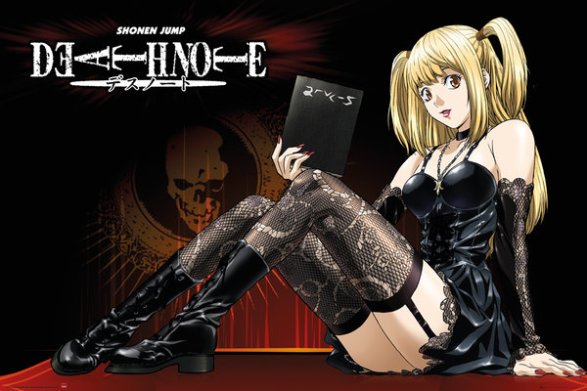
Even a manga as dark and serious as Death Note needed to employ some sort of fan service!

I hope you all enjoyed this little tidbit from my anime class, and I hope you learned something that you didn’t know before.  Fan service plays upon people’s desires, but it’s not perversion or sexualization for sexualization’s sake.  It’s a survival mechanic.  The Japanese market is drastically different from the Western market regarding things like comics and manga, and I hope I could shed a little light on that.

If you’re interested in more content like this, please leave a comment and let me know.  I sincerely enjoy writing about the things I learn in class.


Day 7: Forests, Fashion Districts, and Farewells

_MG_6522

Hello everyone, sorry this one took so long to get out.  I’ve been home for about three days now, and the jet lag has just destroyed my sleep schedule and energy levels.

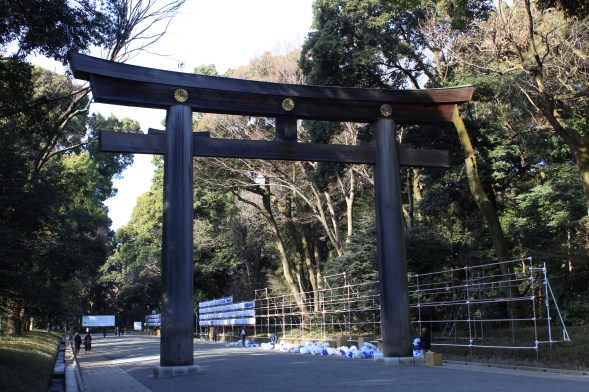
Anyway! Our final day in Japan was just as exciting and energy-filled as the others.  Our first stop was the Meiji-Jingu Shrine just outside the famous Harajuku district.  The shrine is surrounded by a massive forest, which makes it stand in contrast to the concrete jungle around it.  Upon entering the forest, almost all sounds of the city are drowned out by the numerous trees and the crunching of gravel beneath your feet.  The entire area was so serene and calming, it was hard to believe that the entire forest surrounding the shrine was completely man-made.

_MG_6551_MG_6558_MG_6559

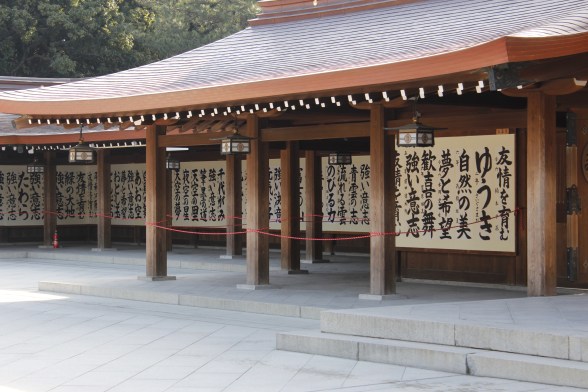
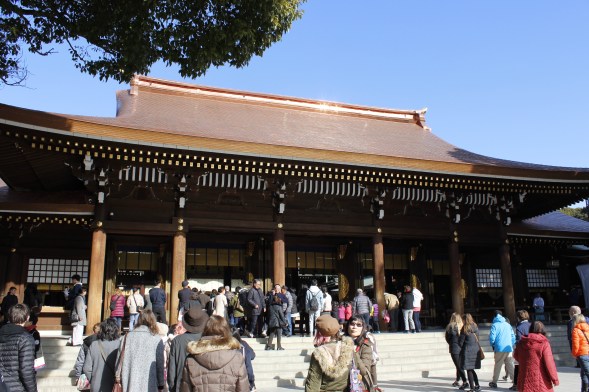
At the center of the forest, the main shrine building stands in quiet splendor.  Its simple, yet elegant design brings an instant feeling of peace as visitors wash their hands and mouths to purify themselves before entering.  The inside is simple, yet beautiful.  There is an open courtyard, giving the area a huge sense of space.  The walls are lined with hundreds of letters written by young Japanese students, detailing their wishes for the new year.

The main shrine stands at the back of the grounds.  According to the Japanese, the soul of Emperor Meiji resides there, as the shrine and forest were built in his honor.

_MG_6531_MG_6534_MG_6535_MG_6537

After visiting the shrine, we were unleashed upon the Harajuku district right next door.  For those who don’t know, Harajuku is Tokyo’s renowned fashion district.  Brand-name cosmetics and clothing can be found here.  There are some particularly special brands or designer clothes that are hard to find, that can be bought here.  I bought some perfume for my mom, and she liked it a lot.

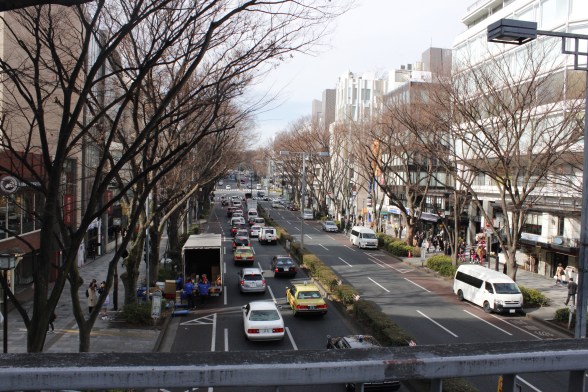
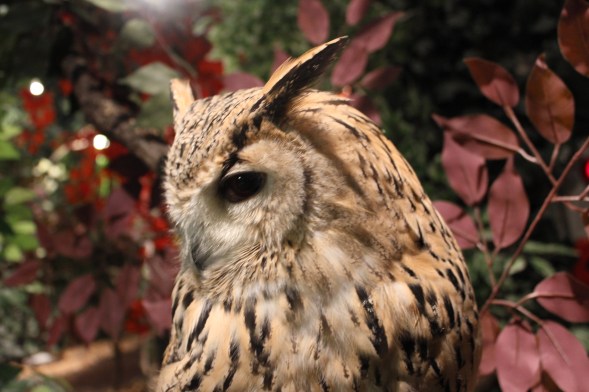
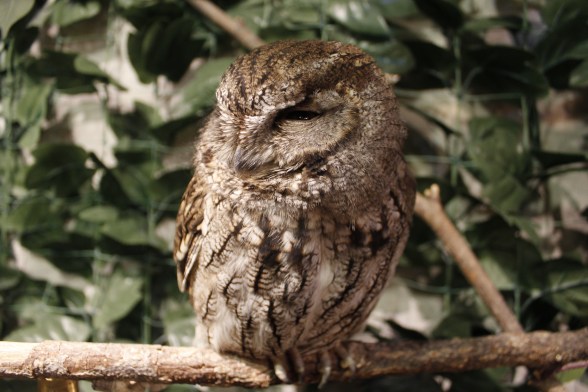
The main street is full of more mainstream brands, but the side streets are where the cool stuff can be found.  There was a store dedicated entirely to condoms.  It was so blatant, it was hilarious.  There was also an owl cafe.  As an owl fan from Hawaii, I would never have an opportunity to interact with owls, so I jumped at the chance while I could.  It was a guilty sort of pleasure, as I felt bad for the owls, being cooped up indoors.

_MG_6565_MG_6567_MG_6572

_MG_6602_MG_6609_MG_6614

After Harajuku, it was time to say farewell to everyone, as we were bused to the airport.  This trip has been a real blessing to me, and I’m glad to know that if I had chosen a different career path last year, I never would have had this opportunity.

I met so many people, went to so many places, and learned so many things.  The week went by so quickly, and there were so many more things I wished I could see and do.  Hey, at least that gives me more than enough reasons to go back soon, right?

_MG_6491_MG_6493_MG_6580

As this small series of posts comes to a close, I find myself pondering.  How will I use these experiences to improve my life even more?  How can I share this feeling of wonder and joy with others?  How can I convince more people to go to Japan?  How do I get more people more interested in learning about this incredible country, it culture, and its people?  Well, I have a few ideas, but you’ll have to wait and see.  😉

But what will I possibly write after finishing this series of journal posts?  While I won’t be posting any amazing adventure posts for a while, I’ll finally be able to touch on other topics I’ve always wanted to write about.  Anime news, my opinions on current events in the otaku world, highlighting local otaku creators, etc.  There’s a plethora of other things for me to write about.  I just hope that you readers will be interested.

Lastly, I just wanted to thank all you readers for your support over the past week.  It has been a real pleasure to share my experiences with you, and I ask for your continued readership as I work to improve myself while on this internship.

Look forward to it!